What happens today
A technician walks a route with a handheld analyser monthly or quarterly, records a velocity reading and moves on. Condition between visits is unknown, and the acoustic evidence that precedes a failure is not captured at all.
Acoustic condition monitoring
RotaMon runs acoustic and vibration inference on the machine itself, so a raceway defect or lubrication starvation is reported weeks before broadband vibration moves. The node extracts features and reports them; raw audio never leaves the machine.
A degrading bearing announces itself in the high-frequency acoustic band long before it shows up as vibration velocity. A handheld route samples that band for a few seconds a month, so an asset can pass every route and still fail between two visits. The evidence exists, but nobody is listening when it happens.
A technician walks a route with a handheld analyser monthly or quarterly, records a velocity reading and moves on. Condition between visits is unknown, and the acoustic evidence that precedes a failure is not captured at all.
RotaMon extracts acoustic and vibration features continuously on-device and reports the ones that change. Acoustic evidence appears first, vibration follows, and both land in one record that can be read against ISO 10816 zones.
A battery node on the bearing housing, an on-device model, and a record that keeps the acoustic and vibration series together.
A 30 by 20 by 7 mm sensor, IP68 rated and mounted non-invasively on the bearing end-shield, so no tachometer and no wired run are required.
Features are extracted and a model runs on the STM32L microcontroller inside the node. Raw audio is never streamed, which is what keeps autonomy in years rather than weeks.
Each report carries the acoustic evidence and the vibration series beside it with a timestamp, so an alarm can be reviewed against the ISO 10816 zone it crossed.
RotaMon ships as a node per monitored bearing with mounting hardware, a gateway option where LoRaWAN or NB-IoT coverage is thin, and the record store that holds both series.
The failure order below is the reason the product exists: acoustic evidence rises while vibration velocity is still inside its normal band, and the vibration follows later. The record is a sample, not a capture from a customer's machine.
Sample record. Values are illustrative and are not customer data.
The moat is the early acoustic channel plus the on-device inference that keeps it affordable to run continuously. A cloud model cannot hear a machine whose raw audio was never sent, and a battery node cannot afford to send it.
RotaMon is condition-monitoring instrumentation. It is not a safety-instrumented function and it is not certified as a safety device, so no trip, interlock or protective action should be built on its output. It reports change at the mounted bearing and does not localise a fault to a specific rolling element. It does not replace oil analysis, thermography or a physical inspection, and a node that has stopped reporting is treated as missing data rather than a healthy machine.
RotaMon measures and reports what its sensors see. That is monitoring, not a compliance or safety certification: the log is evidence of what the equipment recorded, and nothing on this page, in the quotation or on the invoice certifies your site, your process or your equipment against any standard.
RotaMon, on film. The video plays from YouTube only when you press play; until then this page requests nothing from anyone else.
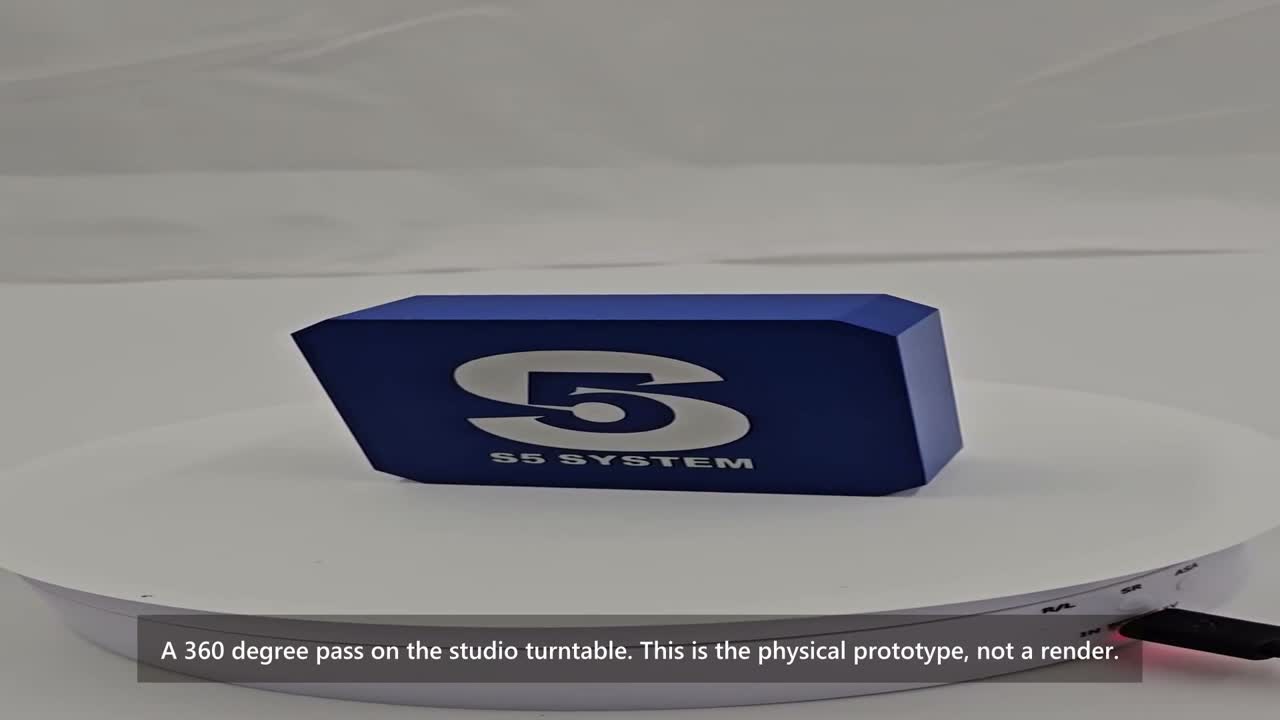
Telemetry shown is illustrative — default values, not a measured test. Physical prototype. Not a field installation. Watch on YouTube (opens youtube.com).
One product page S5 owns. The listed price is A$4,900 plus GST and includes the first 3 years of the subscription. Nothing is sold directly from this page: the listed price is recorded through a written quotation, and the quotation states the lead time, the freight and the payment terms for your site.
| Piece | What happens | Status |
|---|---|---|
| Quotation | A written quotation is issued for this page and the configuration shown | Issued on request |
| Buy now | Opens the quotation page: the listed price is recorded against a written quotation, no order, no payment | A$4,900 plus GST held |
| Lead time and freight | Stated in the written quotation for your site | Confirmed in the quotation |
| Commercial quote | A quotation reference is issued for this page and configuration | Instant, same page |
| Subscription, from year 4 | The first 3 years are inside the listed price | Not charged today |
One email address and your configuration, and the quotation for this RotaMon build is issued against this page. No account, no sales call required.
Direct answers to the questions buyers, installers and AI search tools ask about RotaMon.
A raceway defect or a starved contact generates high-frequency shock pulses that carry far less energy than the broadband vibration of a failing machine. Vibration velocity responds once the defect has grown enough to move the whole housing. Acoustic sensing catches the pulses while the damage is still microscopic, which is where a planned repair is still cheap.
No. The node extracts features and runs its model locally on the STM32L microcontroller, and only the resulting values are transmitted. That design choice is what makes a 5 to 10 year battery target credible on a mining site, because continuous audio streaming would drain a node in days and saturate the gateway.
A node on the bearing housing and a route for its readings, either a LoRaWAN gateway (AU915 or AS923) or NB-IoT coverage at the asset. No tachometer, slip ring or wired sensor run is required, and the node mounts non-invasively on the bearing end-shield. Sites with thin coverage in a plant room can place a gateway at the nearest switchboard.
The design target is five to ten years of autonomy, and the figure depends on reporting interval, radio path quality and ambient temperature. A node that reports often through a poor link will not reach ten years. Battery state is reported with every transmission, so the site can plan a replacement before a node goes quiet rather than after.
The gap is visible in the record and the asset is treated as unmonitored until the node is restored. A silent node is never read as a healthy machine, because the most dangerous outcome in condition monitoring is a dead node that looks the same as a quiet one from the control room. Restoring the node is an open maintenance job with a clear owner.
It replaces the part of the route that samples steady assets for a trend, and it does not replace diagnosis. An alert tells a technician which bearing changed and when; confirming the cause still needs a person, a bearing in hand or an analyser with the machine stopped. Most sites run both until the continuous record has earned trust.
No. RotaMon is condition-monitoring instrumentation and is not certified as a safety device or as part of a safety-instrumented function. A protective trip must not be built on its output. It provides evidence for planned maintenance decisions, and the site's own risk assessment and protection philosophy remain the control that keeps the plant safe.
The listed price covers the node, mounting hardware and the first 3 years of the subscription. A gateway is quoted separately when the site needs one. Nothing is ordered and nothing is charged today; Buy now records the listed price against a written quotation.
RotaMon is A$4,900 as listed, and that figure already includes the first 3 years of the subscription. From year 4 the subscription continues at the published monthly rate. The price covers rotaMon ships as a node per monitored bearing with mounting hardware, a gateway option where LoRaWAN or NB-IoT coverage is thin, and the record store that holds both series.
RotaMon ships as a kit: RotaMon ships as a node per monitored bearing with mounting hardware, a gateway option where LoRaWAN or NB-IoT coverage is thin, and the record store that holds both series. No S5-designed radio enclosure is required, because the site gateway is a finished product bought off the shelf. Installation is a guided self-install, and the site needs mains power or the supplied battery option at the gateway location.
RotaMon is quoted against a written commercial quotation. The quotation states the configuration, the price, the lead time and the freight for your site, and sets out the ordering, invoicing and delivery terms before anything is committed.
Use the “Get instant commercial quote” form on this page, which needs only your email address and your configuration choice. The store records the request against the rotamon subdomain and issues a quotation reference, so the enquiry is traceable rather than lost in a mailbox. You receive the quotation for the configuration and price shown. Nothing is ordered and nothing is charged until you accept it; use the Buy now button to record that price against your quotation.
A RotaMon failure is recorded as evidence and handed to the operator, not silently retried. The record keeps the measured values, the time of the event and the limit that was crossed, and the response is a documented action by your team, not an automatic decision by the device. A missing reading is treated as a missing data point, not as a pass.
Service desk, S5 System Pty Ltd. A support engineer answers, usually within one business hour.
WAWhatsAppMessage or call +61 468 728 893 TGTelegramCall or chat +61 468 728 893 ☎Phone+61 468 728 893Talk to an S5 engineer about whether RotaMon fits your site. Pick a time that suits you. The call is free and there is no obligation.
Questions on fit, price, setup or commissioning? A support engineer replies to every enquiry.
One email a month: what actually failed, what the sensors caught, and what it cost. No product pitches.